

Can You Recharge AA Batteries Without a Charger? What Is Safe to Do.
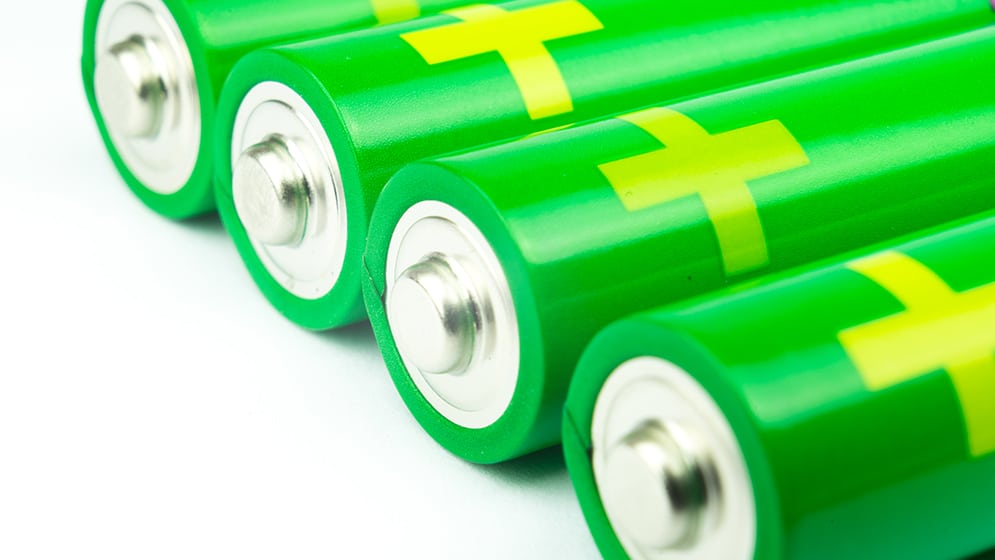
Can You Recharge an AA Battery Without a Charger?
The safe answer depends on one question:
Is the AA battery actually designed to be rechargeable?
If an AA battery is a non-rechargeable primary battery, such as a conventional alkaline or zinc-carbon battery, it should not be recharged.
If it is a rechargeable AA battery, it should be charged only using a charging method specifically designed or approved for that battery chemistry and product.
There is no general-purpose household trick that safely turns a non-rechargeable AA battery into a rechargeable one.
Heating, squeezing, biting, immersing, cross-connecting batteries, or improvising a charging circuit should not be used as substitutes for a compatible charger.
Panasonic states that primary batteries are not designed for recharging and warns that attempting to recharge them can cause leakage or other accidents. Energizer similarly advises users not to recharge a battery unless it is specifically marked “rechargeable.”
First: “AA” Is a Size, Not a Battery Chemistry
One of the most common battery misunderstandings is assuming that every AA battery is essentially the same.
“AA” primarily describes a common cylindrical battery size.
Different AA-format products can use different chemistries and electrical systems.
Examples include:
| AA Battery Type | Typical Classification | Rechargeable? |
|---|---|---|
| Alkaline AA | Primary battery | No |
| Zinc-carbon AA | Primary battery | No |
| Ni-MH AA | Secondary battery | Yes |
| Certain lithium AA products | Depends on chemistry and product design | Check manufacturer |
| Rechargeable 1.5 V lithium AA | Rechargeable product with specific charging requirements | Only as specified by manufacturer |
The label on the battery matters more than the physical size.
Before charging any AA battery, identify its chemistry and confirm that the manufacturer specifically states that it is rechargeable.
Can You Recharge a Normal Alkaline AA Battery?
Conventional alkaline AA batteries are generally primary batteries and are not intended for normal recharging.
Panasonic specifically warns against charging alkaline and zinc-carbon dry batteries, citing risks including rupture, leakage, fire, or explosion.
Therefore, if a standard disposable alkaline AA battery is depleted, the appropriate response is replacement and disposal or recycling according to local requirements—not an improvised charging method.
A battery showing even a temporary voltage change after being warmed, rested, squeezed, or manipulated has not necessarily been “recharged.”
Terminal voltage and usable stored energy are not the same thing.
What About Rechargeable Ni-MH AA Batteries?
Nickel-metal hydride, or Ni-MH, is one of the most common rechargeable AA battery chemistries.
These batteries are specifically manufactured for repeated charging and discharging.
However, rechargeable does not mean “charge it with anything.”
Ni-MH batteries should be used with a charger designed for Ni-MH cells and operated according to the charger and battery manufacturers' instructions.
A suitable charging system is designed to control charging conditions rather than applying arbitrary electrical power to the cell.
Energizer recommends using only chargers designed for the battery type being charged.
What About 1.5 V Rechargeable Lithium AA Batteries?
This category deserves special attention because the products may look similar to ordinary disposable 1.5 V AA batteries.
Some rechargeable lithium AA products include internal electronics and may require:
- a dedicated proprietary charger;
- a manufacturer-specified charging dock;
- an integrated charging interface;
- another explicitly approved charging method.
The fact that a battery has the dimensions of an AA cell does not mean a generic Ni-MH charger is suitable for it.
Always follow the exact charging instructions for the specific product.
Do not assume compatibility based only on:
- battery size;
- nominal voltage;
- connector appearance;
- charger shape.
Why “Charging an AA Battery Without a Charger” Is the Wrong Question
A charger is not simply a source of electricity.
A properly designed charging system controls electrical conditions according to the battery chemistry and product design.
Depending on the battery type, relevant parameters can include:
- charging current;
- voltage;
- temperature;
- charge termination;
- timing;
- cell condition;
- protection limits.
Different rechargeable battery chemistries require different charging behavior.
That is why connecting a battery to an unrelated power source is not equivalent to using the correct charger.
The better question is:
What charging method does the manufacturer specify for this particular rechargeable battery?
Why Common Internet “Battery Hacks” Should Be Avoided
A number of methods have circulated online claiming to restore or recharge disposable AA batteries.
They are not appropriate substitutes for a compatible charger.
Heating the Battery
Changing battery temperature can temporarily influence electrochemical behavior and terminal voltage.
That does not convert a depleted primary battery into a properly recharged battery.
Battery manufacturers also warn against excessive heat because high temperatures can contribute to leakage, capacity loss, or rupture.
Squeezing, Biting, Crushing, or Deforming the Battery
Mechanical deformation does not recharge a battery.
Manufacturers warn users not to crush, puncture, disassemble, or otherwise damage batteries because doing so can lead to leakage or rupture.
A dented or damaged battery should not be treated as successfully “revived.”
Putting a Battery in Liquid
Household liquids are not battery chargers.
Immersing or contaminating a battery can damage its casing, contacts, insulation, or connected electronics.
The chemistry inside a sealed commercial battery is engineered and manufactured under controlled conditions. Adding an external household liquid does not restore its internal active materials.
Connecting One Battery Directly to Another
Two batteries should not be improvised into a charging system simply because one has a higher voltage or more remaining energy.
A proper charger manages the electrical conditions required by the rechargeable battery.
Uncontrolled battery-to-battery connections do not provide the same charge-control functions.
Connecting an AA Battery to an Unrelated Power Source
A USB supply, phone battery, bench supply, adapter, or other source is not automatically a suitable AA battery charger.
Voltage alone does not establish charger compatibility.
What Should You Do If You Have Rechargeable AA Batteries but No Charger?
There are several safe alternatives.
1. Identify the Battery Chemistry
Read the battery label.
Look for information such as:
- rechargeable;
- Ni-MH;
- lithium-ion;
- Li-ion;
- product model;
- charging instructions.
If the label does not identify the battery as rechargeable, do not assume it is rechargeable.
2. Obtain a Compatible Charger
For rechargeable batteries, use a charger specifically designed or approved for the battery chemistry and model.
This is the simplest and most reliable approach.
3. Use the Manufacturer-Provided Charging Method
Some rechargeable AA-format products use a charging system that differs from a conventional AA charger.
Follow the specific product instructions.
4. Use a Replacement Battery When Immediate Power Is Needed
If the device accepts ordinary replaceable AA batteries, using a compatible replacement battery is preferable to improvising a charging method.
Check the equipment manual because some products have specific restrictions regarding battery chemistry, voltage, or rechargeable cells.
5. Consider Spare Rechargeable Cells for Future Use
For equipment that consumes AA batteries regularly, maintaining an appropriate set of spare charged cells can reduce the temptation to use improvised emergency charging methods.
Use cells and chargers compatible with the equipment and battery manufacturer's requirements.
Can You Use Rechargeable and Disposable AA Batteries Together?
Generally, different battery types, brands, ages, capacities, or charge states should not be mixed unless the equipment manufacturer specifically allows it.
Panasonic advises against mixing batteries of different capacities, types, brands, ages, or conditions because differences between cells can contribute to over-discharge and leakage.
This includes avoiding arbitrary combinations of rechargeable and primary batteries.
For devices using multiple AA cells, follow the device manufacturer's battery recommendations.
Can Old and New AA Batteries Be Mixed?
This is also generally discouraged.
Cells with different remaining capacities may discharge differently when connected in the same device.
Battery manufacturers commonly recommend replacing batteries in a set together rather than mixing substantially different states of charge or age.
Why Does a “Dead” AA Battery Sometimes Work Again After Resting?
This can create the impression that an internet battery trick has worked.
Under load, a battery's terminal voltage may decrease because of internal resistance and electrochemical limitations.
After the load is removed, the measured voltage may partially recover.
This phenomenon does not mean the battery has been recharged.
The remaining usable capacity may still be very low.
The same distinction explains why a depleted battery might temporarily operate a low-power device after failing in a higher-power device.
That is not equivalent to restoring the battery to its original state.
How Should AA Batteries Be Stored?
Always follow the battery manufacturer's instructions.
General good practice includes:
- storing batteries in a cool, dry location;
- avoiding excessive heat;
- protecting batteries from physical damage;
- preventing loose batteries from contacting conductive metal objects;
- keeping batteries away from children where appropriate;
- keeping battery types organized to reduce accidental mixing.
Energizer states that batteries can be stored in a cool, dry place at normal room temperature and that refrigeration is unnecessary.
What Should You Do With a Leaking or Damaged AA Battery?
Do not attempt to recharge a leaking, swollen, crushed, punctured, or otherwise damaged battery.
Avoid unnecessary handling and follow the manufacturer's instructions.
Disposal and recycling requirements depend on the battery chemistry and local jurisdiction.
Lithium-containing AA-format batteries may require different disposal procedures from ordinary alkaline batteries, so identify the chemistry before choosing a waste or recycling channel.
How Do You Choose the Right Rechargeable AA Battery?
The best battery depends on the equipment.
Consider:
Battery Chemistry
Confirm what battery types the device manufacturer allows.
Voltage Requirements
Do not assume that all AA batteries have identical voltage characteristics.
Capacity
Capacity influences expected runtime but should be considered together with the device's load profile.
Current Capability
Higher-power equipment can place greater demands on the battery than clocks, remote controls, or other low-power devices.
Charging System
Make sure the charger is suitable for the selected battery.
Operating Temperature
Applications used outdoors or in unusual environments may require additional consideration.
Frequently Asked Questions
Can I recharge a disposable AA battery?
Conventional disposable alkaline and zinc-carbon AA batteries are not intended to be recharged. Use a replacement battery instead.
How can I recharge AA batteries if I lost my charger?
If the batteries are rechargeable, identify their chemistry and obtain a charger or charging system specifically approved for them. Do not improvise a charger from unrelated batteries, adapters, or power sources.
Can I recharge an AA battery with a USB cable?
Only if the specific rechargeable battery product was designed by its manufacturer to use that charging method. A standard AA battery should not simply be connected to a USB supply.
Can heating a dead AA battery recharge it?
No. A temperature-related temporary change in electrical behavior is not the same as restoring stored electrical energy through a controlled charging process.
Does biting or squeezing a battery make it work again?
Mechanical deformation is not a charging process and can damage the battery. Do not intentionally crush, squeeze, puncture, or deform batteries.
Are all 1.5 V AA batteries disposable?
No. Products with different chemistries and internal designs exist in the AA format. Read the exact product label and charging instructions.
Can a Ni-MH battery use any AA charger?
No. Use a charger designed for Ni-MH batteries and follow the battery and charger manufacturers' requirements.
Are rechargeable AA batteries always 1.2 V?
Many conventional Ni-MH AA batteries have a nominal voltage around 1.2 V, while other rechargeable AA-format products may use different internal designs. Always identify the exact battery chemistry and specification.
HOPPT Battery Engineering Perspective
Battery size, voltage, chemistry, capacity, charging method, temperature range, and load characteristics all need to be considered together.
The same principle applies from small rechargeable cells to industrial battery packs: a battery should be charged according to its electrochemical system and engineered charging requirements rather than by an improvised power source.
For custom industrial batteries, charging strategy is normally coordinated with cell selection, BMS limits, system voltage, thermal behavior, equipment load, communication strategy, and the intended operating environment.
References
- Panasonic Energy — Dry Batteries FAQ
- Panasonic Energy — Rechargeable Battery FAQ
- Energizer — Battery Care: Dos and Don'ts
Safety Notice: This article provides general battery information. Always follow the labeling, datasheet, user manual, and charging instructions supplied with the specific battery, charger, and device.

