

Can You Restore a Lithium-Ion Battery in a Freezer? Safety Facts and Proper Handling
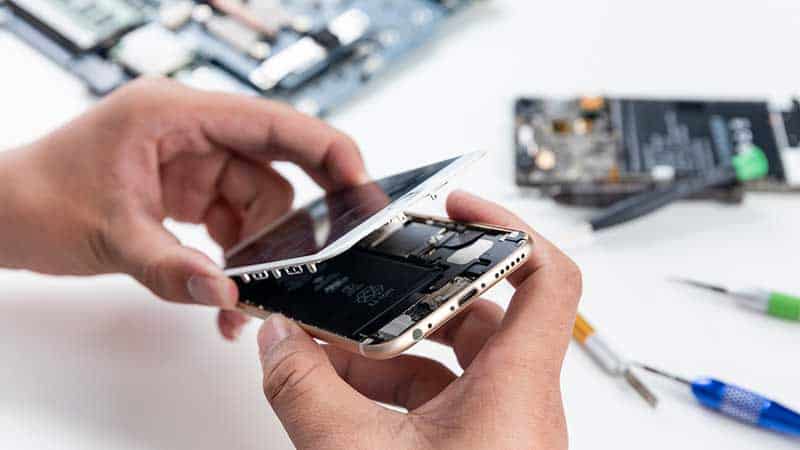
Can a Freezer Restore a Lithium-Ion Battery?
No. A household freezer should not be used to restore, revive, repair, or recharge a lithium-ion battery.
If a lithium-ion battery has lost capacity, will not charge normally, becomes swollen, overheats, leaks, or shows physical damage, placing it in a freezer does not repair the underlying electrochemical degradation.
For batteries showing abnormal behavior, the safer approach is to stop using the battery and follow the instructions provided by the battery or equipment manufacturer.
The U.S. Environmental Protection Agency recommends storing lithium-ion batteries around room temperature and notes that there is no need to place them in a refrigerator. Energizer likewise recommends keeping batteries in a cool, dry location at normal room temperature rather than refrigerating them.
Why Does the “Freezer Battery Repair” Idea Exist?
The idea that a battery can be restored by freezing or refrigerating it has circulated online for many years.
Part of the confusion comes from the fact that temperature does affect battery behavior.
Temperature influences:
- internal resistance;
- ion transport;
- available power;
- charging performance;
- discharge capability;
- self-discharge;
- long-term aging.
However, a temporary change in battery behavior caused by temperature is not the same as restoring lost battery capacity.
Lithium-ion batteries are electrochemical systems. Their performance depends on the condition of the electrodes, electrolyte, separator, current collectors, internal interfaces, and other cell components.
When a battery has experienced irreversible aging or physical damage, reducing its temperature does not rebuild these degraded internal structures.
What Happens to a Lithium-Ion Battery at Low Temperature?
Lithium-ion battery performance is temperature-dependent.
At lower temperatures, electrochemical reactions generally become slower and internal resistance can increase. A battery may therefore temporarily deliver less usable power or show a lower available capacity under load.
This does not necessarily mean the battery has permanently lost all of that capacity.
After the cell returns to an appropriate operating temperature, some temperature-related performance limitations may disappear.
That behavior is very different from repairing an aged battery.
A battery affected by:
- long-term cycle aging;
- calendar aging;
- electrolyte degradation;
- internal structural changes;
- abnormal charging;
- excessive heat exposure;
- mechanical damage;
cannot be returned to its original condition simply by cooling it.
Exact operating and storage temperature limits depend on the individual cell and battery-pack specification. The manufacturer's datasheet should always take priority over generalized internet advice.
Why Is a Household Freezer Not a Battery Repair Tool?
A domestic freezer is designed for food storage, not battery conditioning, battery testing, or electrochemical recovery.
Using one as a battery repair method creates several problems.
1. Freezing Does Not Reverse Normal Battery Aging
Lithium-ion batteries gradually lose usable capacity through chemical and structural changes during storage and cycling.
Cooling may temporarily change reaction rates, but it does not reverse most permanent aging mechanisms.
If a battery has reached the end of its useful service life, replacement is normally the appropriate solution.
2. Moisture and Condensation Can Become a Concern
Moving an electronic device or battery between very cold and warmer environments can result in condensation.
Moisture around electrical contacts, protection circuitry, connectors, or other electronic components is undesirable.
For that reason alone, a consumer freezer should not be treated as battery maintenance equipment.
3. Battery Charging Is Temperature-Sensitive
Charging conditions matter significantly for lithium-ion cells.
Battery manufacturers specify an acceptable charging-temperature range for each cell or pack design.
Charging outside the specified range can affect battery performance, lifespan, and safety.
The correct approach is therefore to follow the battery specification—not to use freezing as a preparation step for charging.
4. A Damaged Battery Requires a Different Response
A battery that is swollen, punctured, crushed, leaking, unusually hot, or otherwise physically damaged should not be treated as a battery that merely has reduced capacity.
It should not be frozen in an attempt to recover it.
The U.S. EPA advises consumers to contact the battery or device manufacturer for specific handling information when a lithium-ion battery becomes damaged.
Why Does Lithium-Ion Battery Capacity Decrease?
Loss of battery runtime can have many causes.
Calendar Aging
A lithium-ion battery ages even when it is not being actively cycled.
Time, storage temperature, state of charge, and cell chemistry can all influence this process.
Cycle Aging
Charging and discharging repeatedly causes gradual changes inside the cell.
The rate of degradation depends on factors such as:
- depth of discharge;
- charge and discharge rate;
- temperature;
- operating voltage range;
- cell chemistry;
- application load.
High-Temperature Exposure
Long-term exposure to elevated temperatures can accelerate unwanted chemical reactions inside a battery.
This is one reason battery storage conditions matter.
Cell Imbalance
Multi-cell battery packs may experience differences among individual cells over time.
A properly designed battery management system can monitor important pack parameters, but a BMS cannot reverse permanent electrochemical degradation inside an aged cell.
Abnormal Use or Physical Damage
Impact, crushing, puncture, water intrusion, unsuitable chargers, electrical abuse, and other abnormal conditions may affect the integrity of the battery.
Such cases should be evaluated differently from ordinary capacity aging.
What Should You Do If a Lithium-Ion Battery No Longer Holds a Charge?
First determine whether the issue is actually the battery.
Possible causes can include:
- battery aging;
- charger failure;
- damaged cables or connectors;
- charging-port problems;
- device power-management faults;
- BMS protection;
- temperature outside the normal operating range.
For consumer devices, use the charger and troubleshooting process specified by the device manufacturer.
If the battery is removable and has reached the end of its service life, replacement with a compatible battery is generally preferable to attempting improvised recovery methods.
If there are signs of swelling, leakage, physical deformation, overheating, smoke, unusual odor, or mechanical damage, stop using and charging the battery and seek manufacturer-specific guidance.
Can Deeply Discharged Lithium-Ion Batteries Be Recovered?
A deeply discharged battery is not automatically the same as a failed or damaged battery.
Modern lithium-ion battery packs often contain protection electronics that may disconnect the cells when voltage falls outside the intended operating range.
Whether such a pack can return to service depends on its design, cell condition, protection system, and manufacturer specifications.
Consumers should not bypass the battery management system, directly apply an external voltage to individual cells, or improvise charging connections to force a protected battery back into operation.
For custom industrial battery systems, diagnosis should be performed by qualified personnel using the product's engineering specifications and approved test procedures.
How Should Lithium-Ion Batteries Be Stored?
There is no universal storage condition that applies to every lithium-ion product, so the battery manufacturer's specification should be the primary reference.
As a general principle:
- keep batteries away from excessive heat;
- avoid prolonged exposure to extreme cold;
- keep batteries dry;
- prevent mechanical damage;
- prevent terminals from contacting conductive objects;
- follow the recommended storage state of charge for the particular product.
The EPA states that lithium-ion batteries are generally best stored around room temperature rather than being placed in a refrigerator.
For industrial battery packs, storage requirements may also include periodic inspection, voltage monitoring, humidity limits, maintenance charging, BMS requirements, and specific warehouse safety procedures.
What About Low-Temperature Lithium Batteries?
Low-temperature battery engineering is different from putting a standard battery in a freezer.
Applications such as:
- outdoor instruments;
- cold-region industrial equipment;
- robotics;
- aerospace equipment;
- specialized vehicles;
- polar research equipment;
may require lithium battery systems designed specifically for cold environments.
A low-temperature battery system can involve specialized cell chemistry, thermal design, insulation, battery management strategies, heating systems, charge control, and application-specific validation.
The operating capability of such a battery must be established by its engineering specification and test data.
It should not be inferred from generic lithium-ion battery behavior.
When Should a Lithium-Ion Battery Be Replaced?
Replacement should be considered when a battery can no longer meet the operating requirements of its equipment or when the manufacturer specifies that it has reached its service limit.
Examples can include:
- substantially reduced runtime;
- repeated shutdown under normal load;
- charging abnormalities;
- excessive temperature rise;
- persistent BMS faults;
- significant cell imbalance in an industrial pack;
- physical deformation;
- swelling;
- leakage;
- mechanical damage.
Physical damage and abnormal heating should be treated as safety issues rather than simply as capacity-loss problems.
How Should an End-of-Life Lithium-Ion Battery Be Handled?
Requirements differ by country and region.
In the United States, the EPA states that lithium-ion batteries should not be placed in household garbage or ordinary municipal recycling bins. They should instead be directed to appropriate battery recycling or household hazardous-waste collection channels.
For large industrial lithium-ion battery systems, users should contact the battery manufacturer, system integrator, equipment supplier, or qualified recycling provider because handling and transportation requirements can differ significantly from those for small consumer batteries.
Frequently Asked Questions
Does freezing a lithium-ion battery increase its capacity?
No. Low temperature may temporarily change battery behavior, but freezing does not restore the permanent capacity lost through normal battery aging.
Can I put my phone battery in a freezer if it drains quickly?
No. A household freezer is not an appropriate battery-repair method. If a phone battery has poor runtime, use the manufacturer's diagnostic or replacement process.
Can cold temperatures damage lithium-ion batteries?
Prolonged exposure to temperatures outside the battery's specified storage or operating range can adversely affect performance and may damage the battery. Always refer to the specific cell or pack datasheet.
Can a swollen lithium battery be repaired by cooling it?
No. Swelling is an abnormal condition. Stop using and charging the battery and follow the device or battery manufacturer's handling instructions.
Should lithium batteries be kept in a refrigerator?
For ordinary consumer storage, this is generally unnecessary. The EPA and major battery manufacturers recommend appropriate room-temperature or cool, dry storage rather than household refrigeration.
Can an industrial low-temperature lithium battery operate below freezing?
Some batteries are specifically engineered for low-temperature applications, but their capabilities depend on the cell chemistry, BMS, thermal-management system, load profile, and validated product specification.
HOPPT Battery Engineering Perspective
Battery performance should be evaluated according to the actual cell chemistry, operating temperature, load profile, charge strategy, BMS design, and application environment.
For industrial and customized battery applications, temperature capability is a system-engineering issue rather than a household recovery technique.
Where equipment must operate in high-temperature, low-temperature, high-power, high-voltage, robotic, marine, or other demanding environments, battery selection and system design should be based on measurable operating requirements and validation data.
References
- U.S. Environmental Protection Agency — Frequent Questions on Lithium-Ion Batteries
- U.S. Environmental Protection Agency — Used Lithium-Ion Batteries
- U.S. Environmental Protection Agency — Used Household Batteries
- Energizer — Battery Care: Dos and Don'ts
Safety Notice: This article provides general battery safety information and does not replace the instructions supplied by the battery, charger, device, or equipment manufacturer. Requirements for industrial battery systems and battery disposal may vary by product and jurisdiction.
Prev: Let's kick off the work!
Next: Let's kick off the work!

